Open Dome: fish on the planetarium ceiling
· shows
Open Dome is a jam night in the Star Theatre at the H.R. MacMillan Space Centre, the first one Vancouver has had. Artists bring a laptop, plug into the planetarium and play the ceiling. I brought fish: a whole school of them swimming in a bowl of black smoke above the seats, with an Akai on the desk so I could steer them by hand.
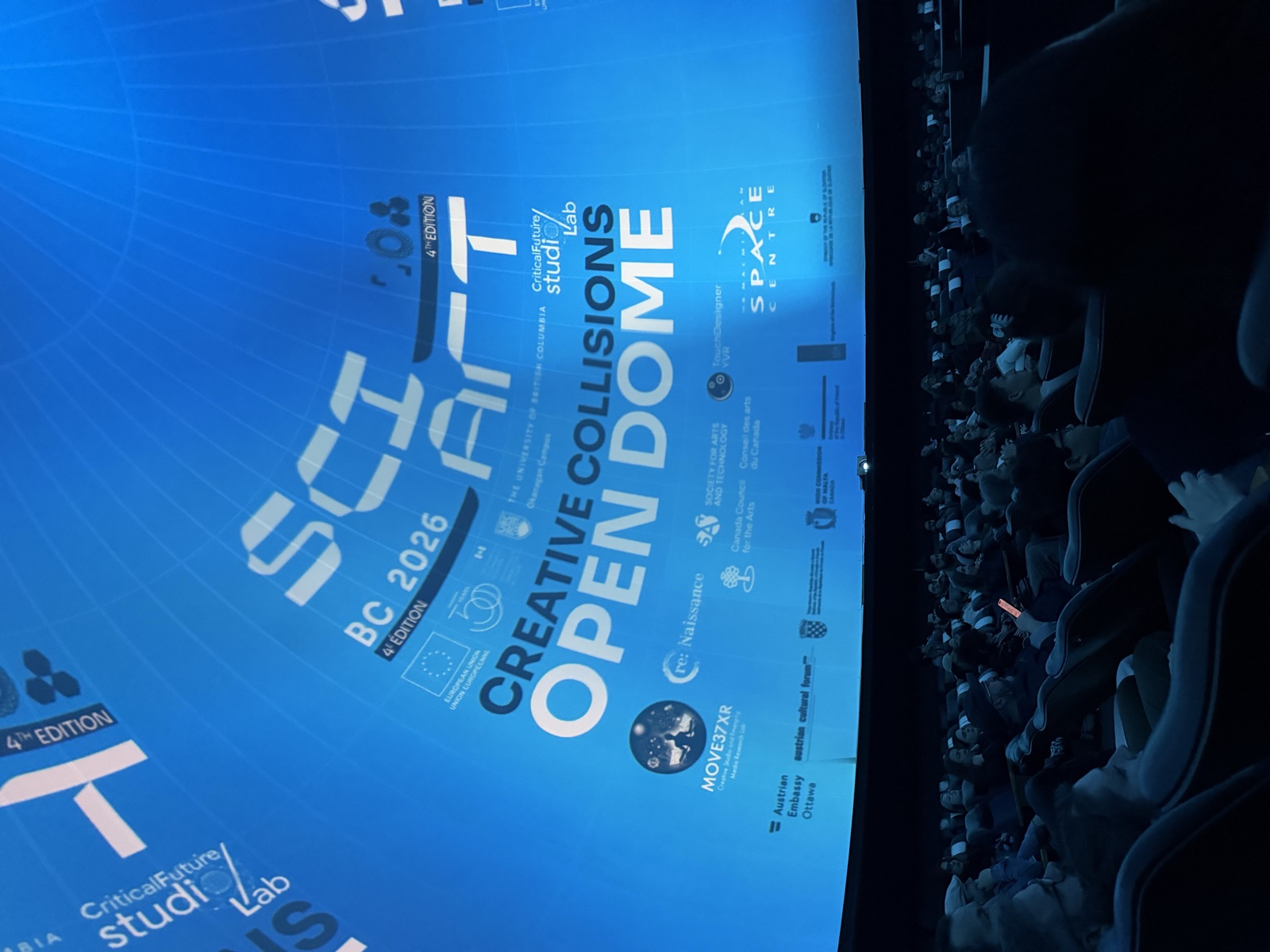
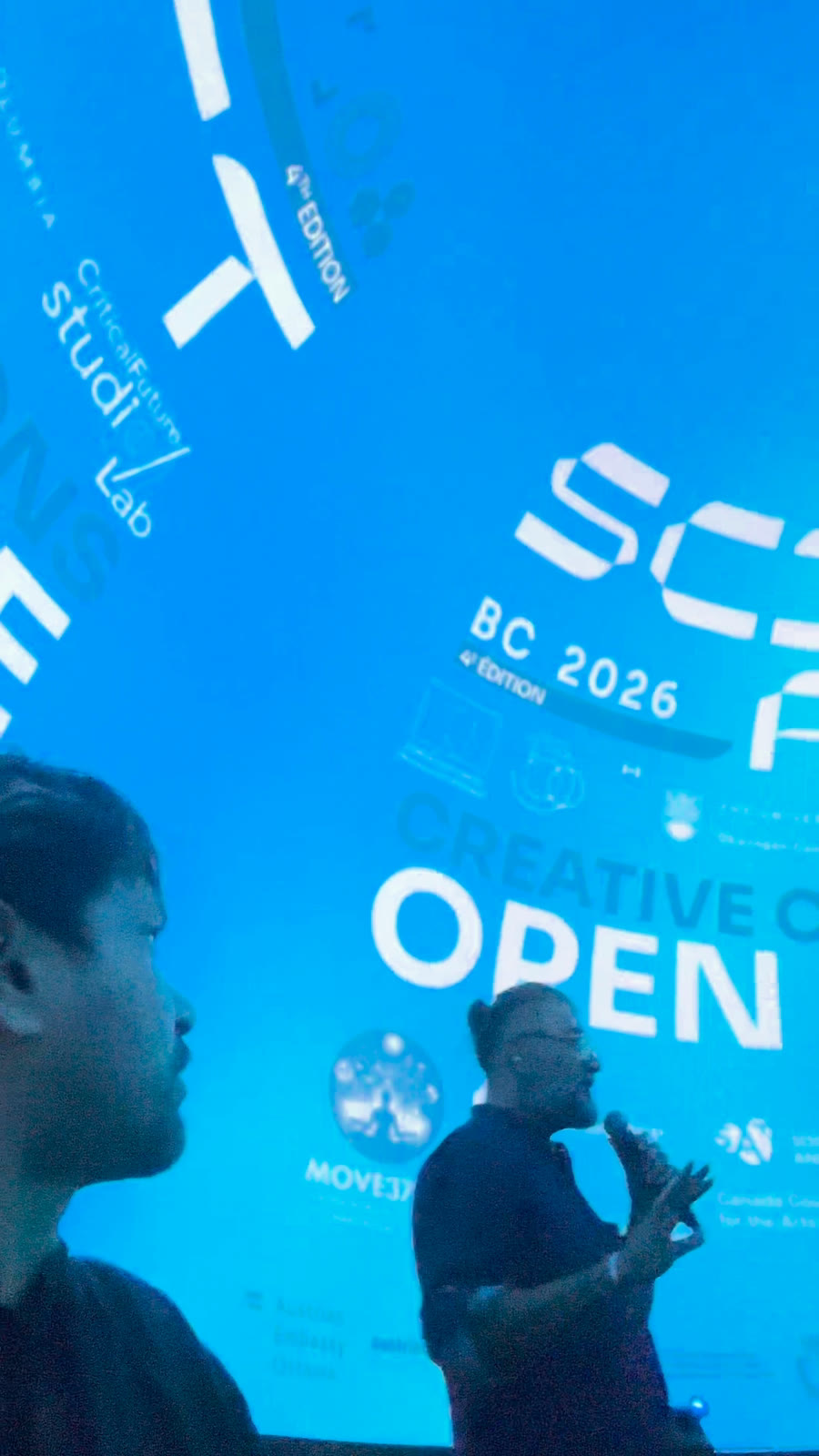
Shoal at Open Dome.
The flock moved house
This flock is old. It started as one dot that wanted to get somewhere, back in the flock that followed me home, and it still spells my name on the homepage. For the dome it first lived in a browser page, flat as a pancake, until I gave it depth so the fish could pass close over the audience and then drift off into the far sky.
The browser ran out of room, so in the last few days before the show the whole thing moved into Unity. The fish came along, and the sky filled up around them: glowing orbs that come down one at a time, smoke that rolls in over the crowd and gets stirred as the school swims through it, cubes that spiral in from the rim and take their seats, and lightning that jumps from orb to orb.
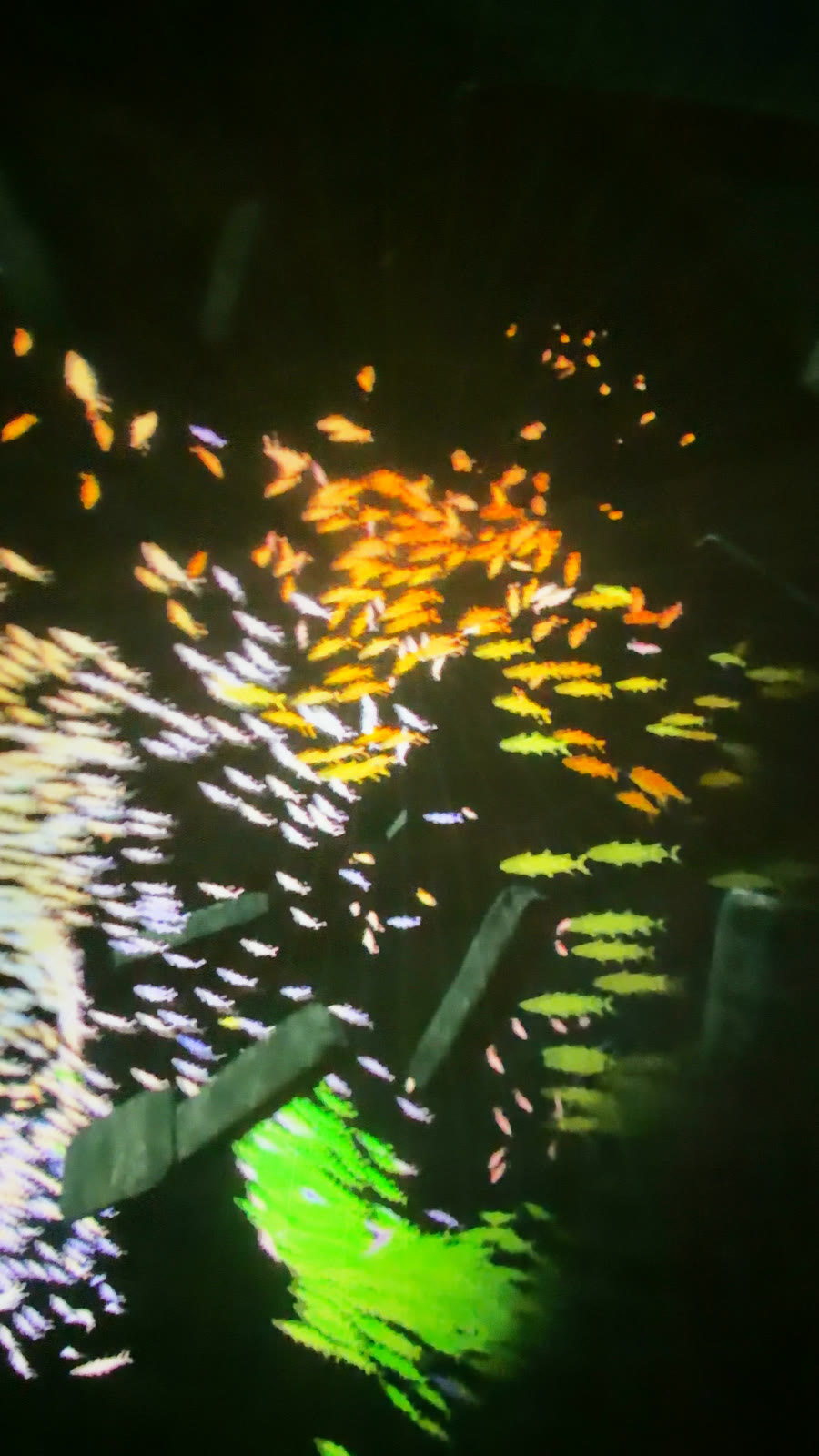
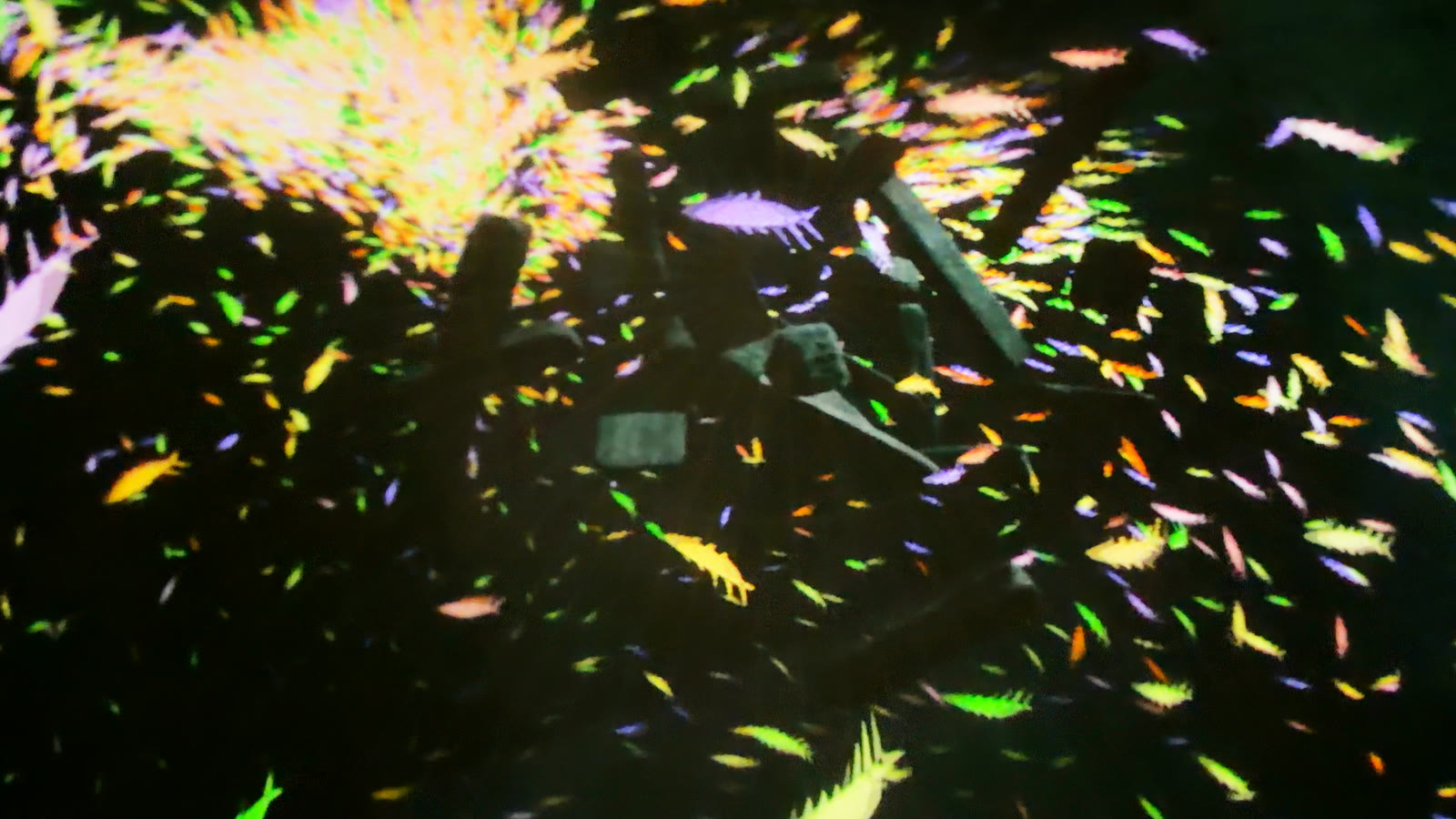
Playing it
Every pad on the Akai is an act. One lets the school just be a school. One drops ripples across the sky for the fish to ride. Sand pulls them onto the lines of a vibrating plate, sunflower seats them in a spiral, and cubes brings the blocks in for them to weave through. The knobs ride how many fish there are, how close they come and how much light is left in the sky, and one pad freezes the lot mid-swim.
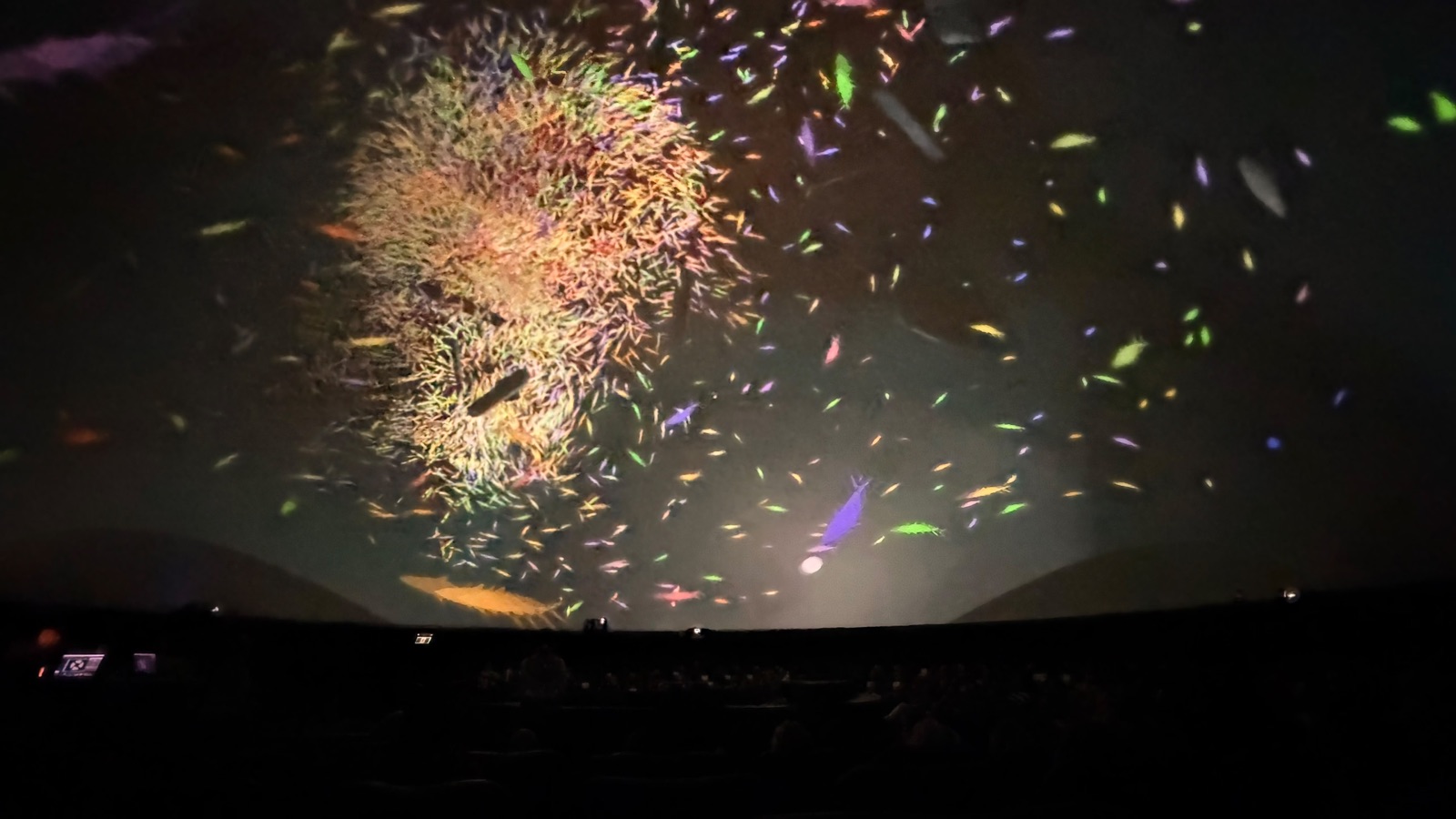
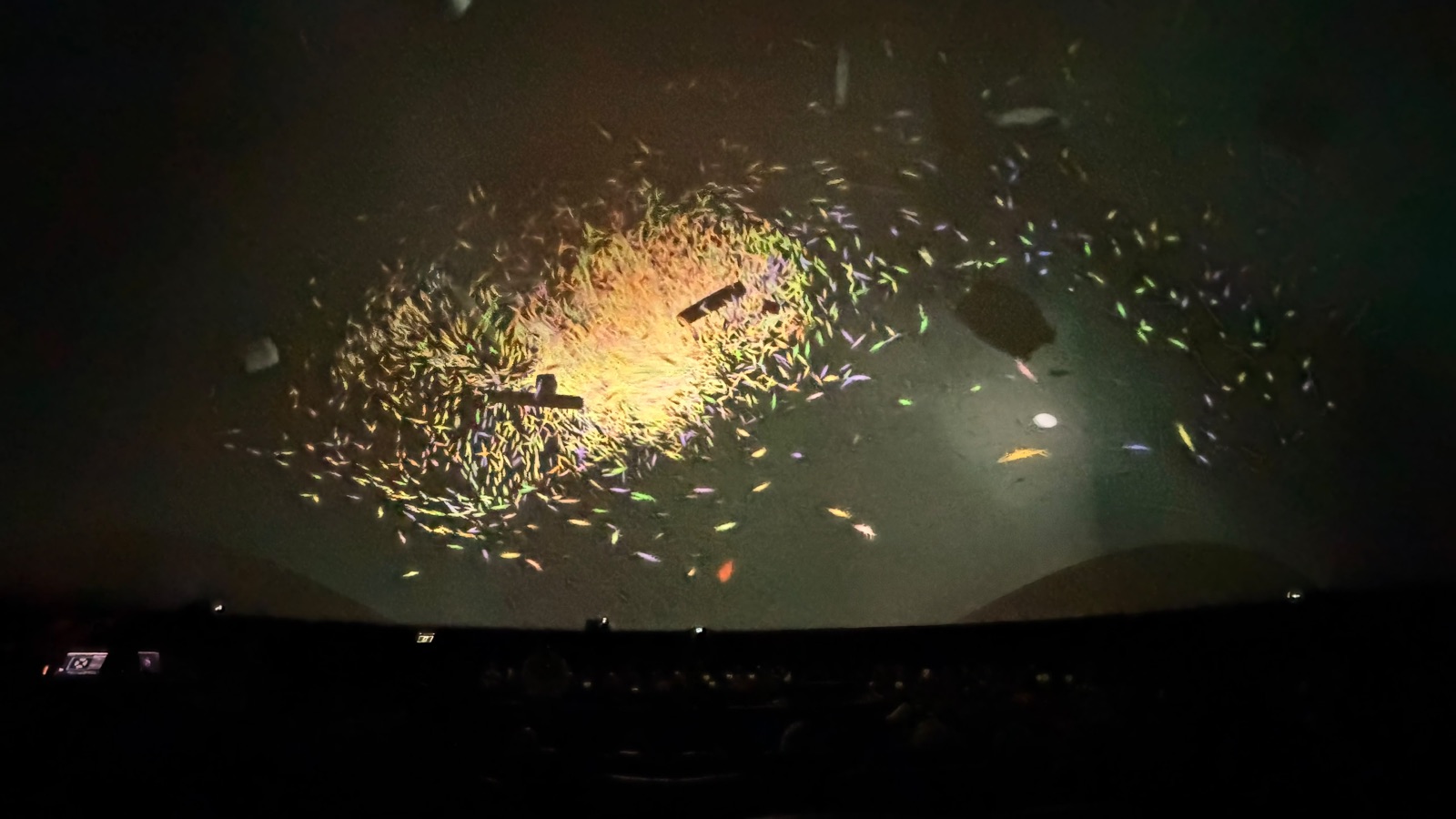
The sound came from a separate page, a little synth lab I built in the browser, and every hit it played was sent across to Unity so the sand stepped on the kick and the bolts could land on it. On the night, that link is the part that crashed.
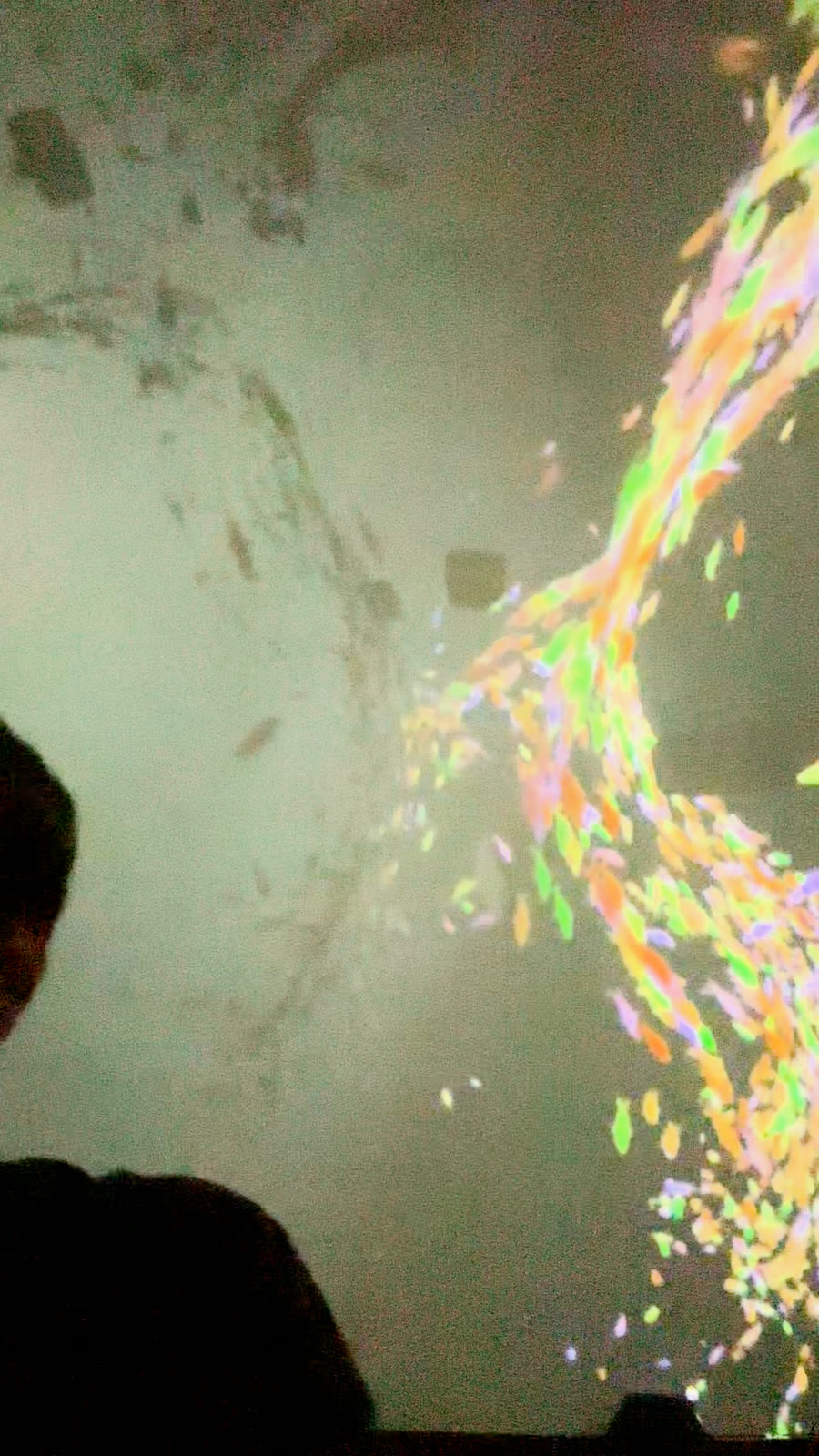
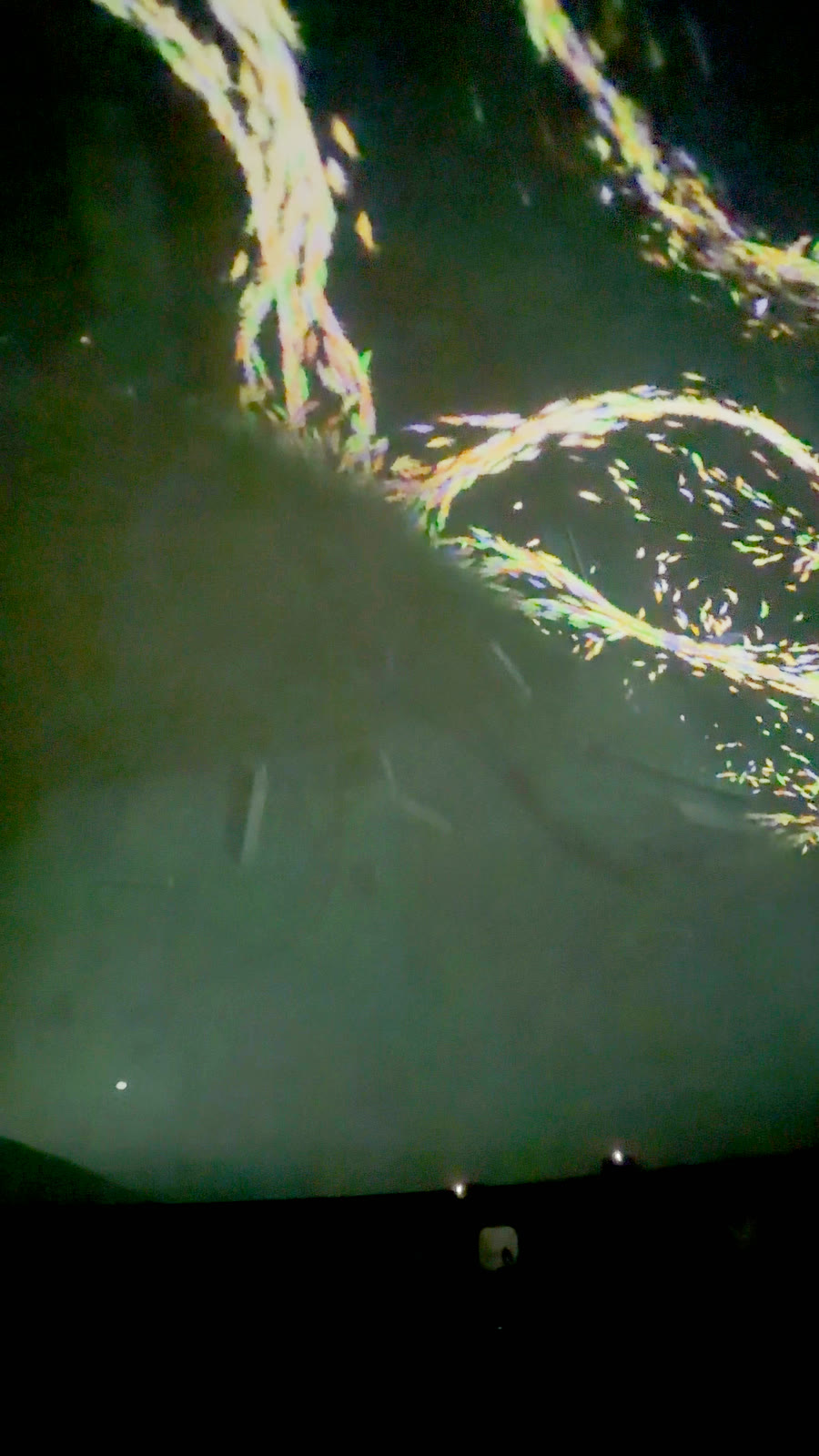
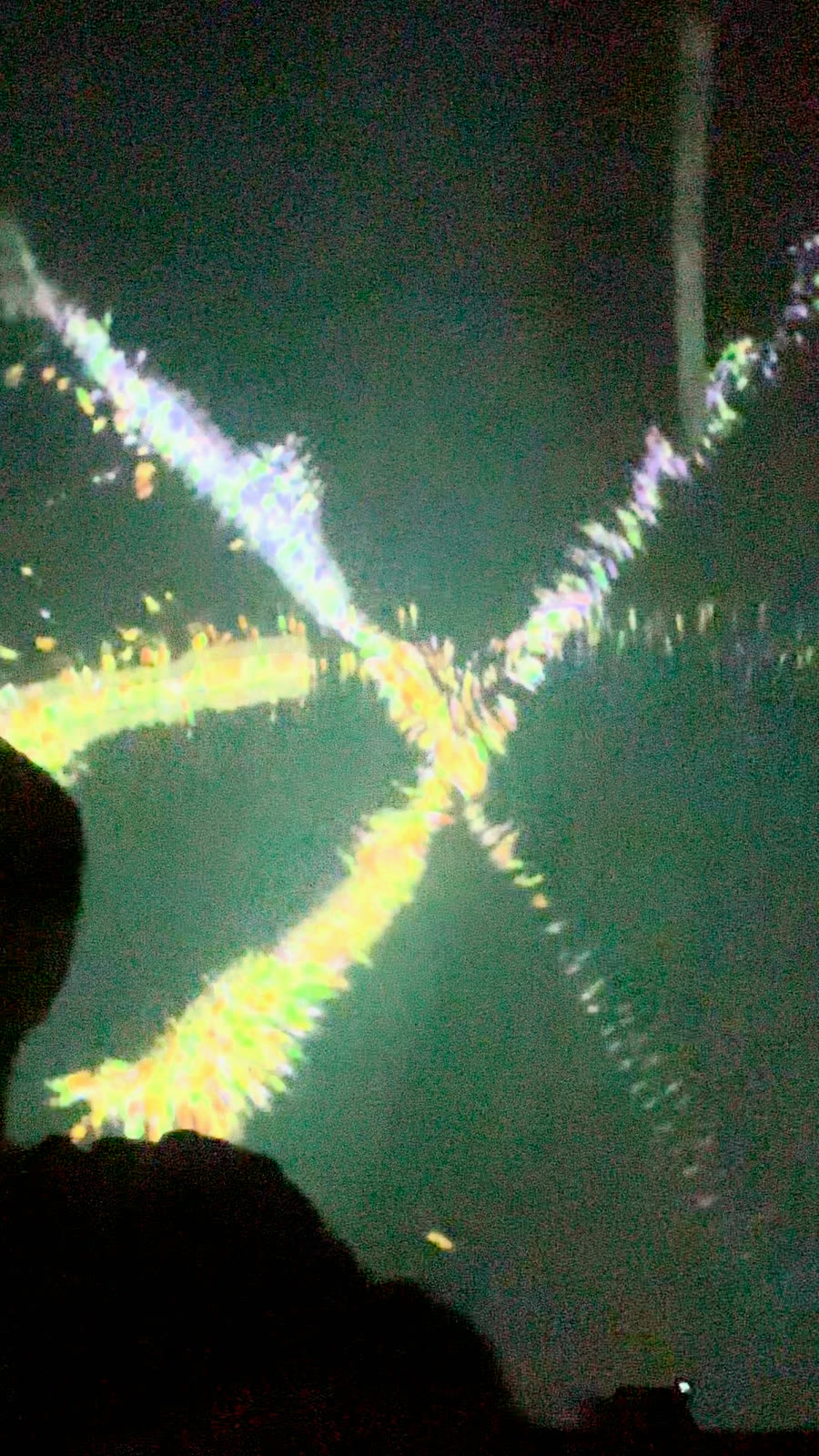
Afterwards, Shoal
A live link between two programs cannot be rendered and cannot be repeated, so after the show I fixed it the boring way. I played the piece once, wrote every note the synth sent into a score, and taught Unity to replay that score frame by frame with no live link at all. The same score now gives the same frames on every run.
The take
It is still a performance, just one that happens twice: once by me, once by the machine. I sat down with the synth and played a long take the way I would under the dome, instruments coming in one by one, the piano reshuffling its pattern about once a bar, the kick getting faster towards the end. The lab wrote down everything I touched. Then I cut it down to size, keeping my entrances in my order and my piano patterns as I played them, and that became the score.
Directing the picture
With the music fixed, the picture became a cue sheet: when the moon comes up, when the fish arrive, when the camera leaves the ground. I wrote the first one as a list in chat, then watched the whole thing back the way an audience would see it and gave notes. A lot of notes. A few of them, as I said them:
- "The camera starts following the flock gently, like a drone, with good easing, not like a human-driven drone, which is jerky on its turns." So the camera lifts off on the piano's climb and glides in among the fish.
- "The two moons are very bright throughout, so black doesn't appear black, it becomes all grey." Now there is one small white moon at a time, far away, and it never parks.
- "Lightning sometimes appears to be in front of the fish." Every bolt is now born on the far side of the school, so the fish turn into black silhouettes against it.
- "Towards the end, the dome can be almost dark when the lightning is striking." The crash is lit by the bolts and nothing else.
Then one render made the piece twice: the circle a planetarium projects, and a full 360 picture you can look around in.
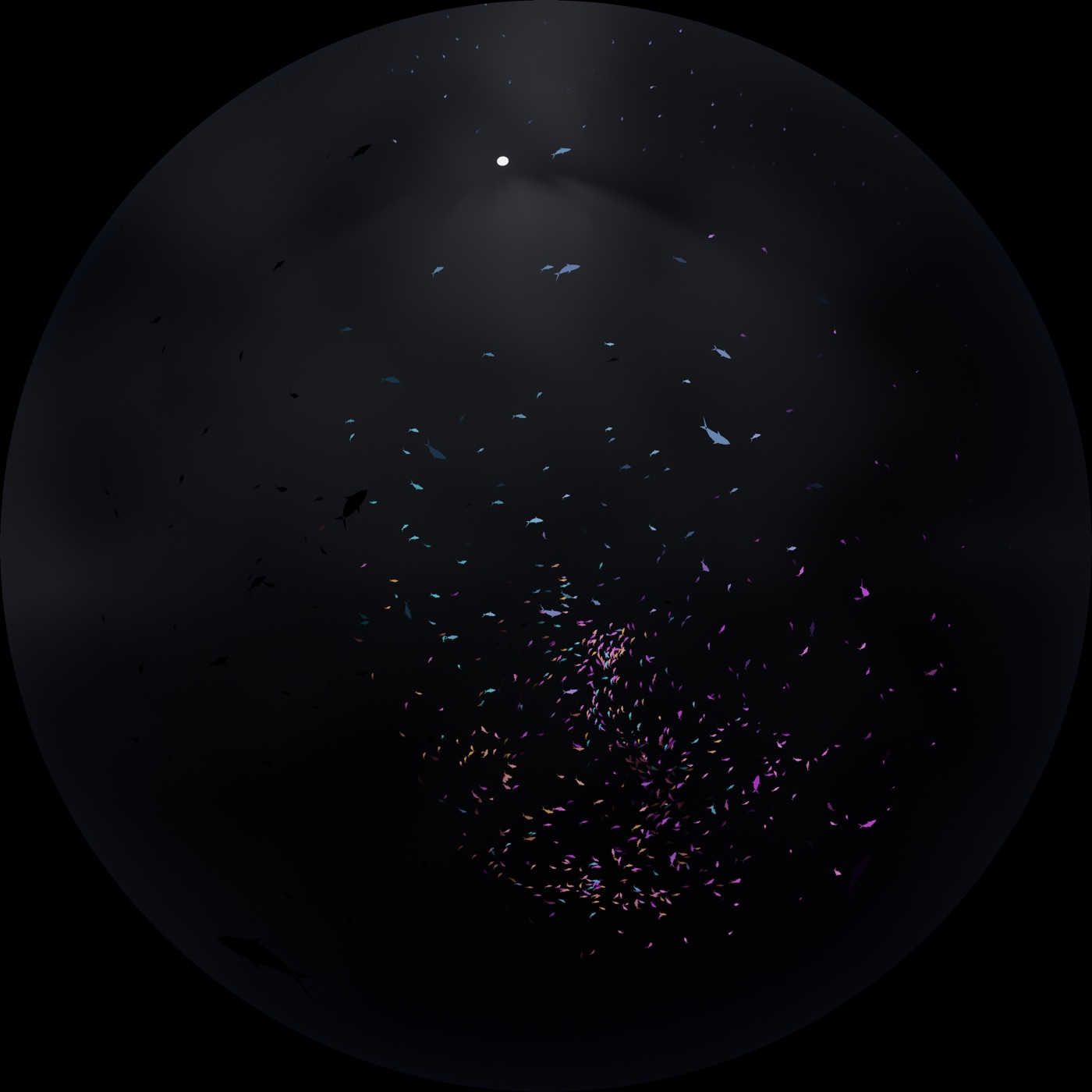
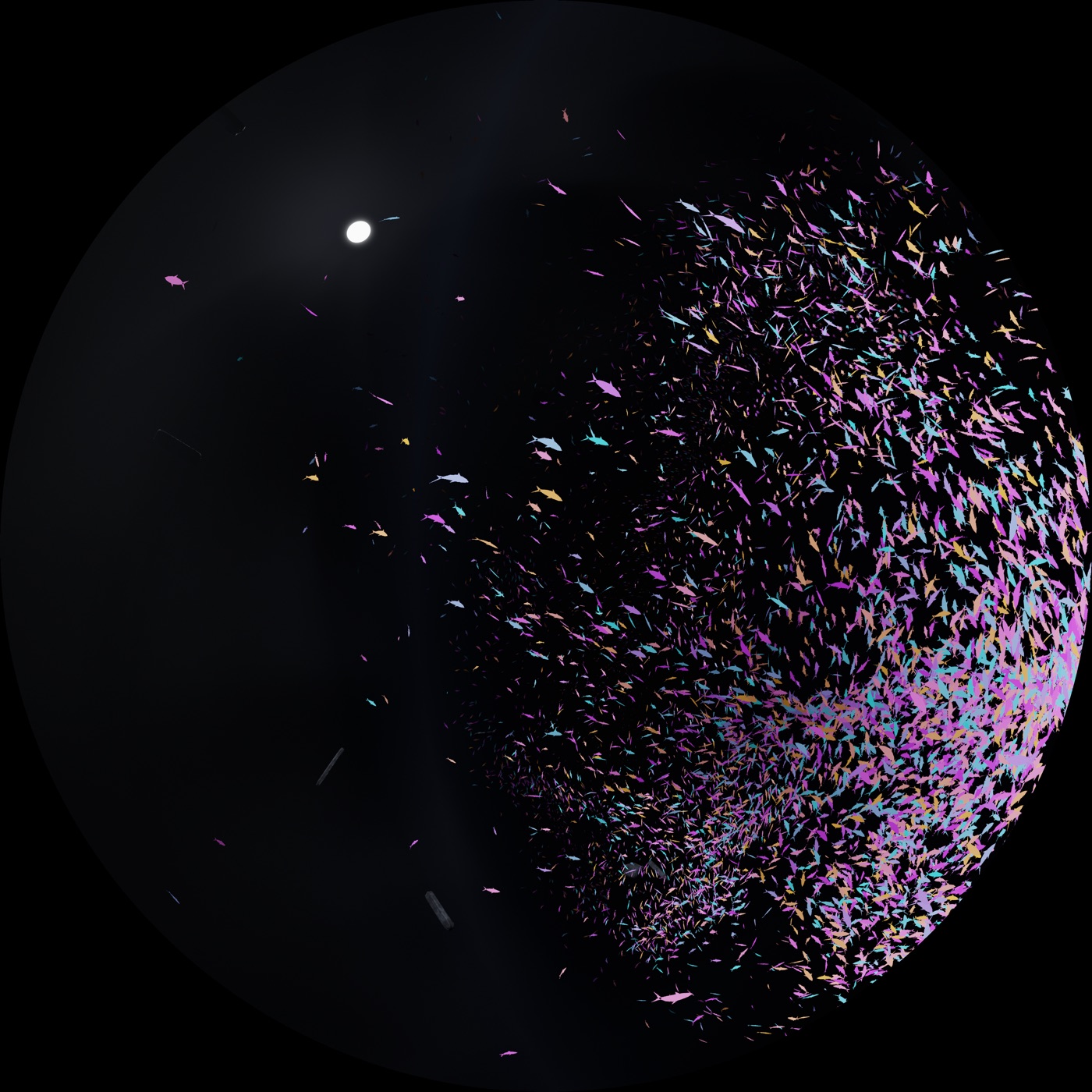
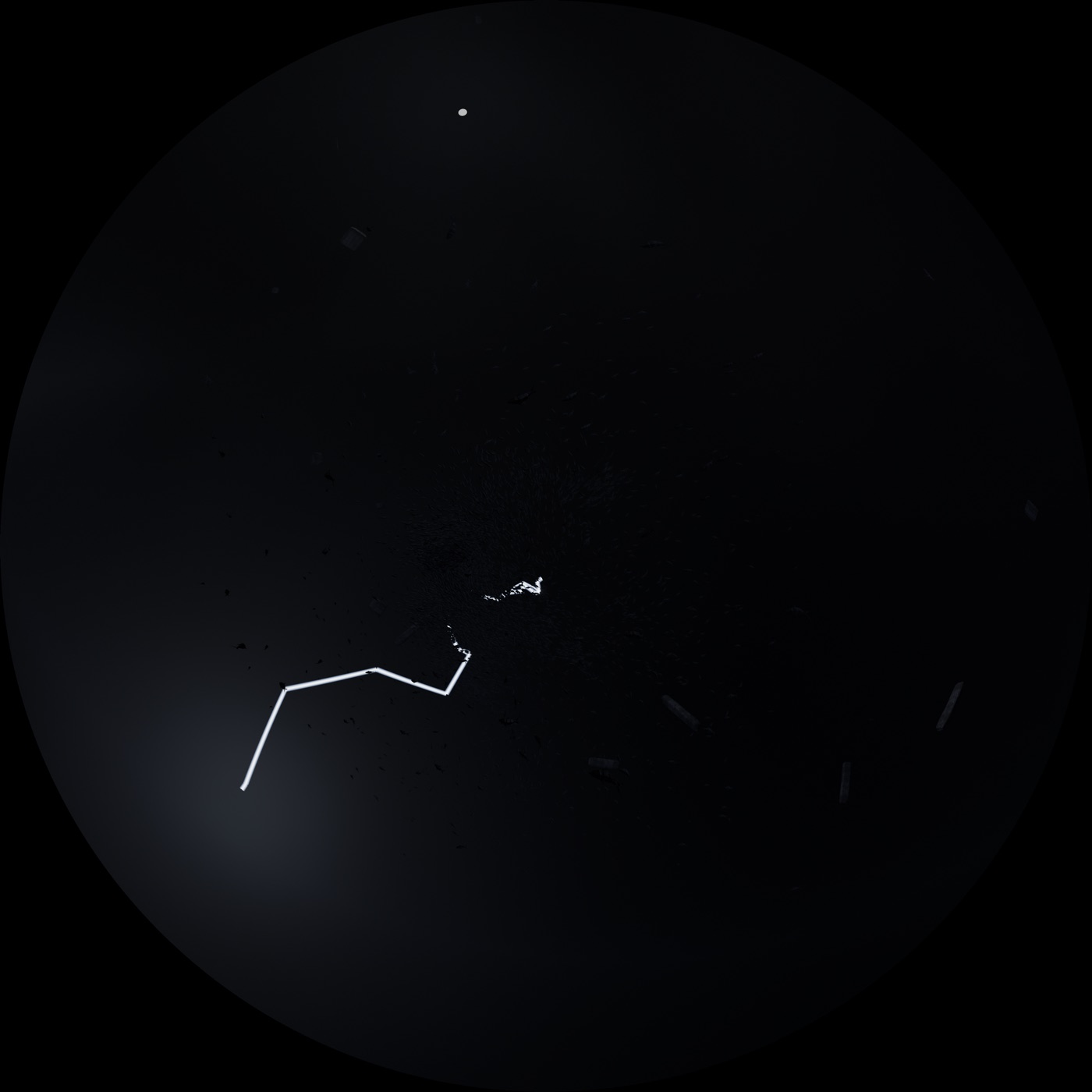
The piece has its own page now, Shoal, where the circle goes back on a dome around you and you start out looking straight up, the way the planetarium shows it.
Under a dome, lie back. On a phone, tilt it.
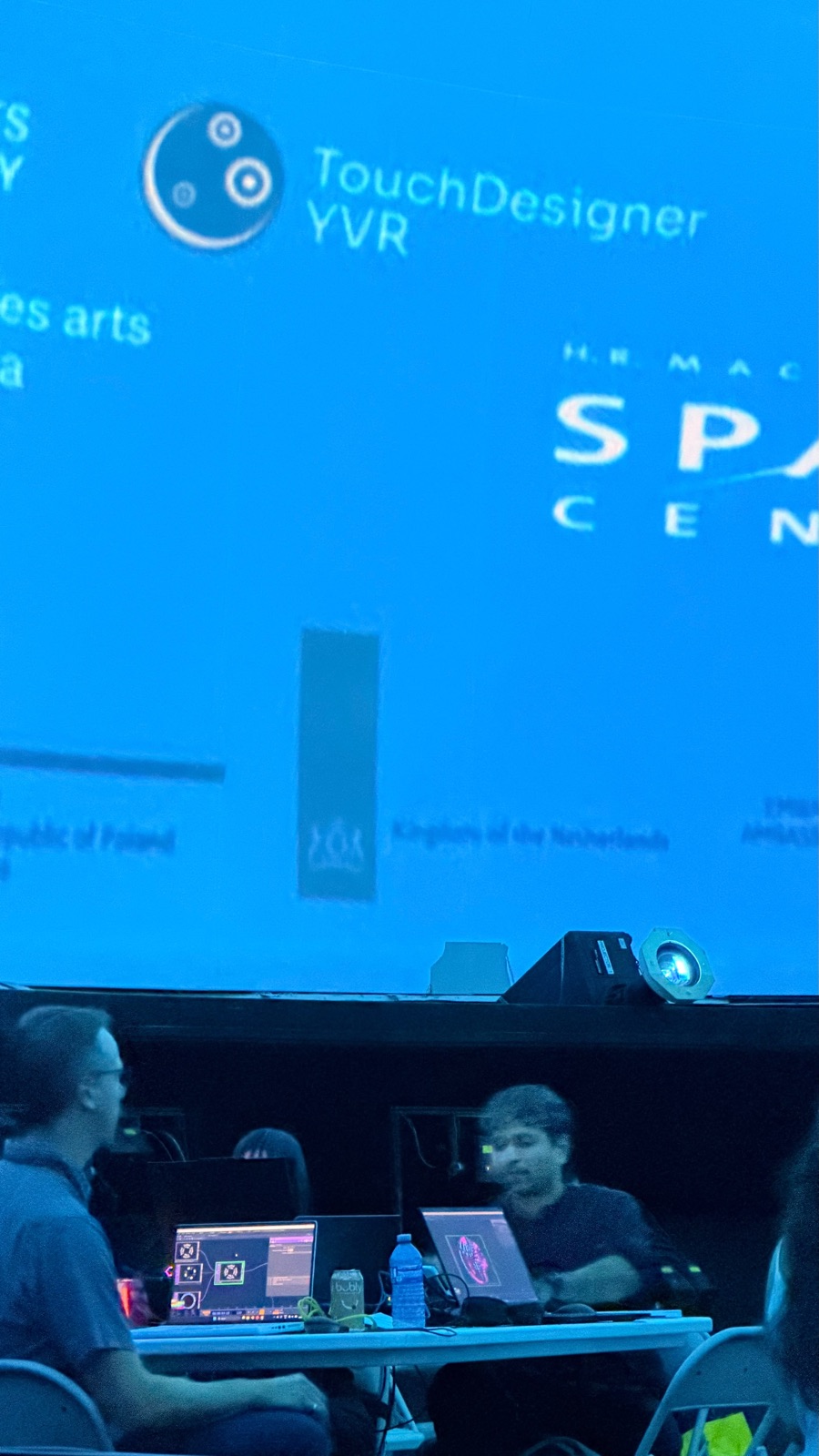
Open Dome was part of SCI_ART 2026, presented by the EU Delegation to Canada, UBC Okanagan's Critical Future Studio/Lab, MOVE37XR, the H.R. MacMillan Space Centre, the Society for Arts and Technology, re:Naissance Immersive and TouchDesigner YVR, with support from the Canada Council for the Arts.